Treasury bills
Short-dated government paper. The steady floor under everything else.
4.9% — 5.3%
Most vaults just hold things. This one puts what’s inside to work — in treasury bills, property, commodities and private credit — and sends the yield back to the people who filled it. Live on Robinhood Chain, backed by USDG.
How it works
Nothing here is exotic. Capital goes in, gets backed by assets that exist in the world, and the income those assets throw off comes back to you.

Move capital in from any supported wallet. It stays yours, and you choose the term.

Your deposit joins a reserve backed one-to-one by audited real-world assets.

The reserve is allocated to income-producing strategies — bills, property, credit.

Whatever the reserve produces is distributed back to depositors, automatically.
Live on Robinhood Chain
Connect a wallet, choose how long to commit, and deposit USDG. Everything below reads the contracts directly — the numbers are whatever the chain actually says.
Deposits are held in an ERC-4626 vault and returned with whatever the reserve earned over your term. Nothing here promises a rate — your position is always worth its share of the vault.
What backs the reserve
Every category is held against documented, auditable collateral. The vault can add new ones without rebuilding itself, so the reserve grows wider over time rather than deeper into one bet.
Short-dated government paper. The steady floor under everything else.

Tokenised property with rent collected and passed through monthly.

Warehoused metals and energy, held against physical delivery receipts.

Senior secured loans to businesses that banks are too slow to serve.

Invoices, royalties, carbon and freight are queued for the next reserve.
The idea
A bank vault is designed to keep wealth still. That made sense when the safest thing capital could do was nothing. It is an expensive habit now.
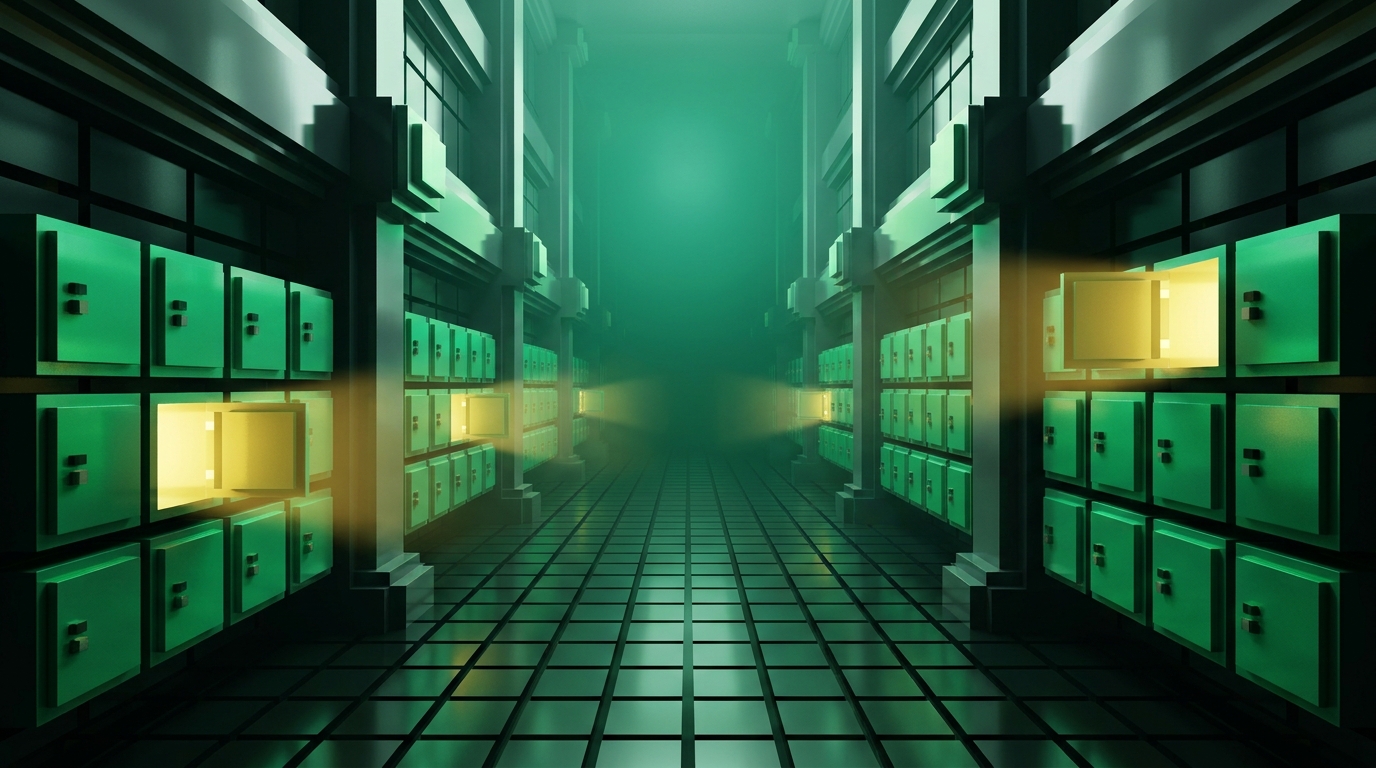
The green door is the part that protects. The gold spilling out is the part most vaults never had: what the reserve earns while it sits there, going back to whoever put it in.


Where this goes
The assets in the reserve are the things a working economy is made of: housing, infrastructure, credit for businesses that need it. Funding them onchain means the returns are not reserved for whoever already had access.
Open the door with $500 or with $5 million. The reserve does not treat those deposits differently.